

What Does Air Conditioning Actually Cost to Run in Cooroy?

We hear it all the time: “I’d love air conditioning, but I’m worried about what it’ll do to my power bill.” It’s a fair concern. But the $1,000+ jump in annual electricity costs that most people fear? It’s based on worst-case scenarios that don’t reflect how most Cooroy households actually use air conditioning.
Here’s what genuinely drives air conditioning costs, and how to keep yours in check.
Queensland electricity tariffs: What you’re actually paying
You need to know your rate per kilowatt-hour before anything else, and this can be found on your current power bill. To give you an idea, in 2026, Cooroy residents on Energex tariffs are looking at roughly:
- Standard tariff (Tariff 11): ~28c–32c per kWh
- Time-of-use off-peak: ~18c–22c per kWh (retailer dependent)
- Time-of-use peak (4pm–9pm): up to 30c+ per kWh
Remember: Electricity rates vary by retailer and change annually, so check your power bill for accurate figures.
Time-of-use tariffs are becoming more common as the cost of living increases, and they matter a lot for air conditioning running costs.
How to work out your own cost per hour
Rather than quote figures that vary by model and conditions, here’s the formula: input wattage × your tariff rate = cost per hour. Input wattage is the electricity your system actually draws, and you can find it on the energy label, in the manual, or on the spec sheet. This gives you a genuine number for your system, not a generic estimate.
One thing worth knowing: every degree below 24°C adds meaningfully to your running cost. For Cooroy summers, we recommend running your system at a temperature of 24–25°C, which is comfortable, efficient, and easy on the bill.
Split system vs ducted: How running costs compare
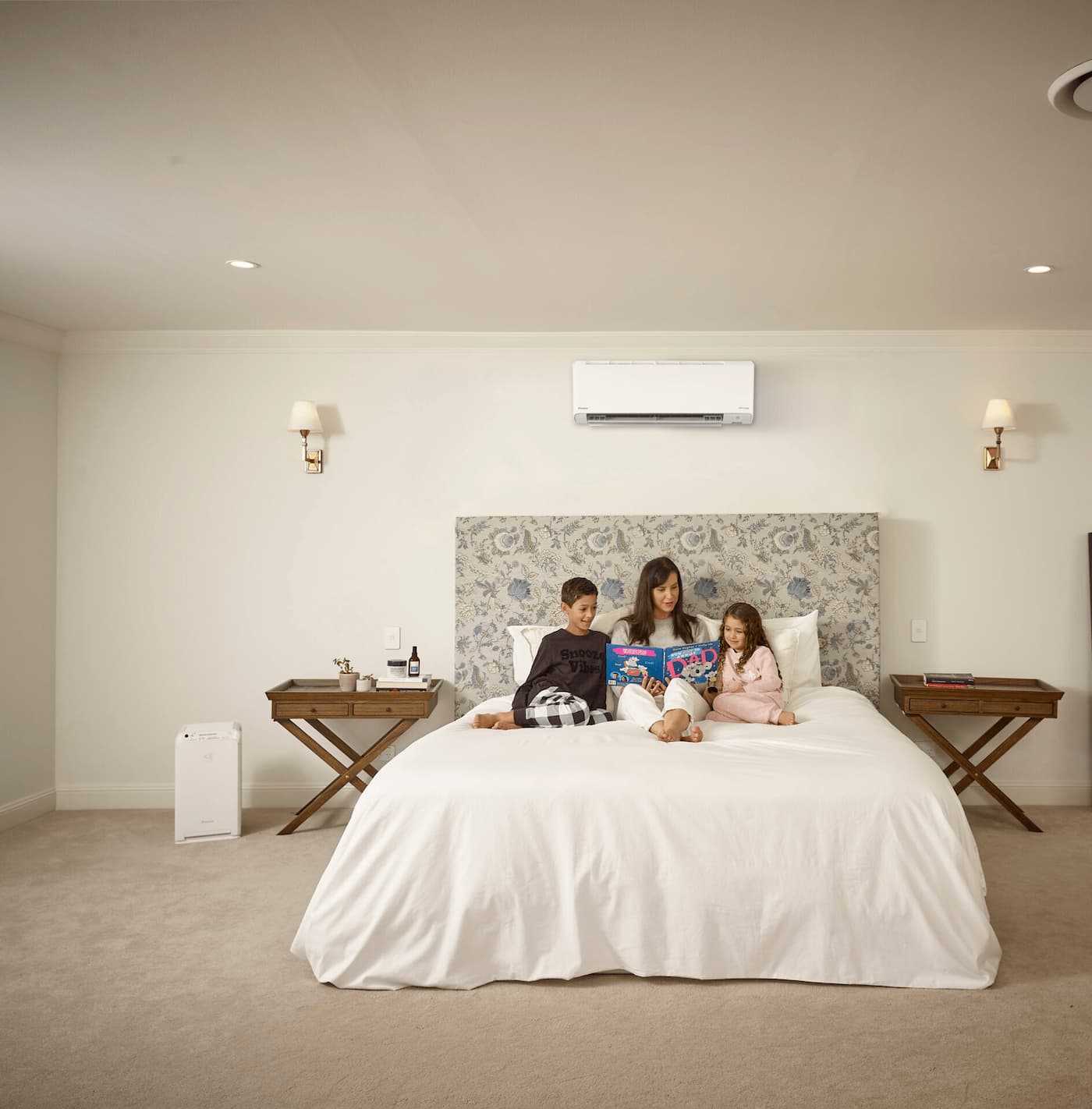
The gap between split and ducted running costs comes down to how much of your home you’re cooling and whether a ducted system is properly zoned. Zoning is non-negotiable when it comes to cost efficiency, as an unzoned ducted system cooling empty rooms is exactly where costs blow out. If you have a smaller home or live in a household that needs cooling in specific rooms only, split systems have the natural advantage in that you’ll only ever run and pay for what you need.
Check out our guide on the most energy-efficient ducted air conditioning to ensure that you are choosing the right system for your home.
The easiest win: Run your AC outside peak hours
The peak period (roughly 4pm–9pm) attracts significantly higher rates than off-peak hours. Our cost-saving suggestion here is to pre-cool your home between 1pm and 4pm and reduce your usage during the expensive evening window to benefit from cheaper per-kWh rates for the bulk of your cooling. The bigger the gap between your peak and off-peak rates, the more you stand to save. Check your plan to see if time-of-use tariffs are available to you.
Do inverter air conditioners actually save money?
Yes, they do, and the numbers are clear. Non-inverter systems run at full power constantly, cycling on and off to hold temperature, while inverter models modulate their output, running efficiently at lower power once the room is comfortable. In fact, inverter systems are consistently shown to use 30–40% less electricity than equivalent non-inverter models over a cooling season – a well-established finding across Australian energy and industry sources. Most recover their small price premium through energy savings within a few years.
Every system we install is an inverter model. For us, it’s not even a conversation. And for you, it’s simply the right choice.
Solar and air conditioning: The perfect Cooroy pairing
Peak solar generation overlaps almost perfectly with the hottest part of the day, exactly when you need cooling most. On a sunny day with a well-sized solar system, daytime air conditioning can run for very little additional cost. If you’re considering both, plan the system sizes in tandem from the start.
How dirty filters quietly drive up your bill
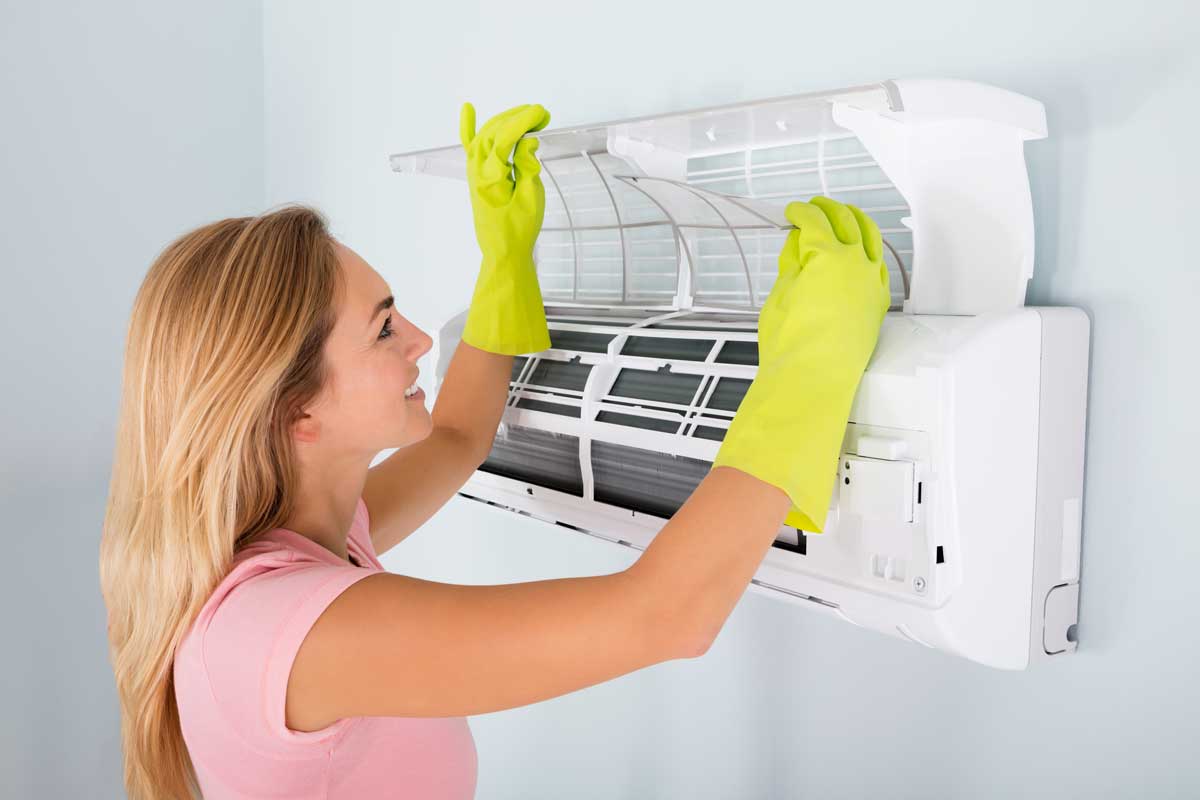
A dust-clogged filter forces the unit to work harder, and according to CHOICE household expert Chris Barnes, a clogged filter can add 5–15% to energy consumption with no benefit to comfort. A quick filter clean every 4–6 weeks will cost you nothing, and an annual professional service can often pay for itself in energy savings.
The $1,000 myth: Where that number actually comes from
The scenario behind it is very specific: an ageing non-inverter system running around the clock, set to 18°C, with blocked filters, in a poorly insulated home, will be very costly. But that’s not how most Cooroy households use their air conditioning. If you run a modern inverter system sensibly, at reasonable temperature setpoints, at smart times, and stay up to date with basic maintenance, you’ll be genuinely surprised by how manageable your cooling costs turn out to be.
So the honest reality here is that air conditioning costs what you make it cost.
Ready to choose the right air conditioning for your home?
Check out our full Cooroy air conditioning services or explore all domestic air conditioning options across the region. And if you are ready to chat about how to find an energy-efficient cooling system that works for your home and your budget, call our expert team on (07) 5482 8100 or book in for a free quote.
Please Share This
Related Posts
Air Conditioner Replacement: Cost Guide & When to Replace vs Repair
Wondering whether it’s time to replace your air conditioner, or if one more repair will get you through? It’s one…
Read More
Commercial Air Conditioning Maintenance Guide for Queensland Businesses
Let’s face it – a commercial air conditioning system works a lot harder than the one at home. Running 8…
Read More
One Mile State School Gympie
TSR recently completed an air conditioning upgrade at One Mile State School in Gympie, delivered for QBuild and installed to…
Read More
Contact us today
Ready to start your project or have questions? Contact us