

Cooling Maryborough’s Queenslander Homes Without Ruining Their Character
We get it, your beautiful 1920s Queenslander with its soaring ceilings becomes an oven every summer. You want modern comfort, but you don’t want bulky air conditioning destroying the period character you’ve worked to preserve.
Well, did you know that you can cool your heritage Queenslander and retain its character? Split systems work best for most Maryborough period homes because they don’t require ceiling cavity access (which most Queenslanders lack) and can be positioned to respect those heritage aesthetics you love.
After 35 years of installing air conditioning in Maryborough’s heritage homes, we understand exactly what properties like yours need. Here’s how to keep your Queenslander comfortable while respecting its character.
Why Traditional Queenslanders Are Hard to Cool
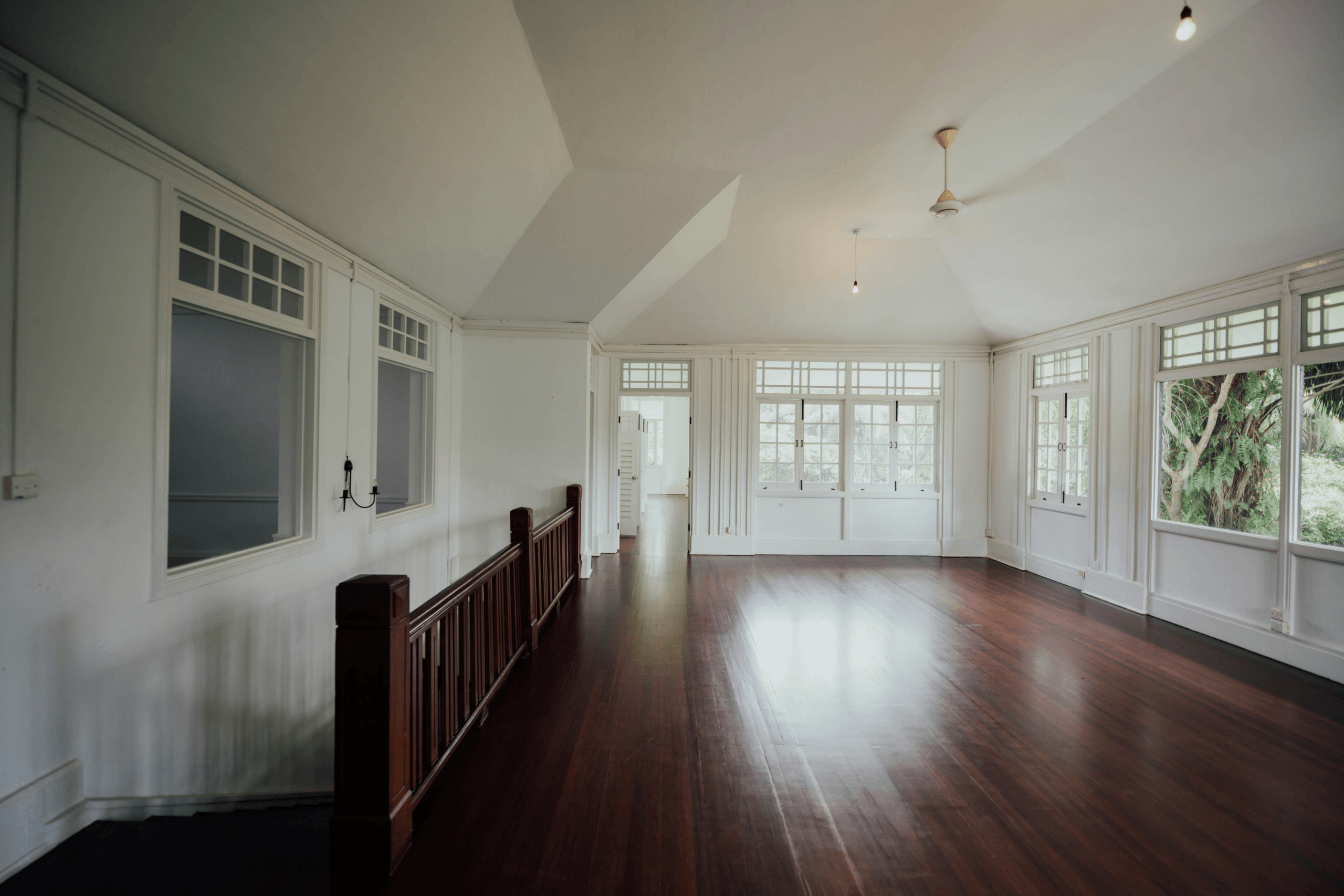
Queenslander homes were brilliantly designed for natural cooling in the 1920s-1940s. High ceilings, verandahs, timber construction, and cross-ventilation worked beautifully… before air conditioning existed.
But what worked for natural cooling creates challenges for modern systems:
- High Ceilings Mean Large Volumes: That 3.5-metre ceiling means you’re cooling 40% more air than a standard room.
- Timber Offers Minimal Insulation: Heat transfers through timber walls and ceilings easily, so cooled air escapes faster than in modern insulated homes.
- Open Doorways for Ventilation: Queenslanders were designed with wide, high doorways left open for airflow, so cooled air doesn’t stay in one room.
- Limited Equipment Placement: Wrap-around verandahs restrict where outdoor units can go without compromising aesthetics or structure.
The High Ceiling Challenge
Standard AC sizing doesn’t account for Maryborough’s heritage homes. Hot air rises, so you might experience 28°C at head height while the ceiling space sits around 35°C. Standard split systems struggle to mix the entire air column, leaving hot zones in tall spaces.
Choose your unit size wisely to ensure adequate cooling.
Split Systems vs Ducted: The Practical Reality
When considering cooling a heritage Queenslander, ducted air conditioning seems ideal for whole-home comfort, but the reality is a little more complicated.
Why Ducted Systems Struggle
Most period Queenslanders have minimal or no ceiling cavity between the ceiling and roof. Ducted systems require 400-600mm minimum for ductwork and insulation, however many heritage homes simply don’t have this.
Even when ceiling space exists, installation means disturbing original ceilings and cutting through historic timber. In our experience with Maryborough heritage homes, ducted installations typically cost $12,000-$20,000+ versus $6,000-$10,000 in modern homes.
Why Split Systems Work Better
Split systems mount on walls without requiring ceiling access, making them practical for most Maryborough Queenslanders. You get room-by-room control, and cooling only your occupied rooms will significantly lower your running costs compared to whole-home ducted systems running continuously. Plus, reverse cycle heating provides efficient warmth for winter mornings.
For most old Queenslanders, split systems deliver better value with fewer complications.
Hiding Modern AC in Heritage Aesthetics
Wondering where to install a modern AC unit so it doesn’t take away from the beauty of your home? Here are some ideas to consider:
Indoors:
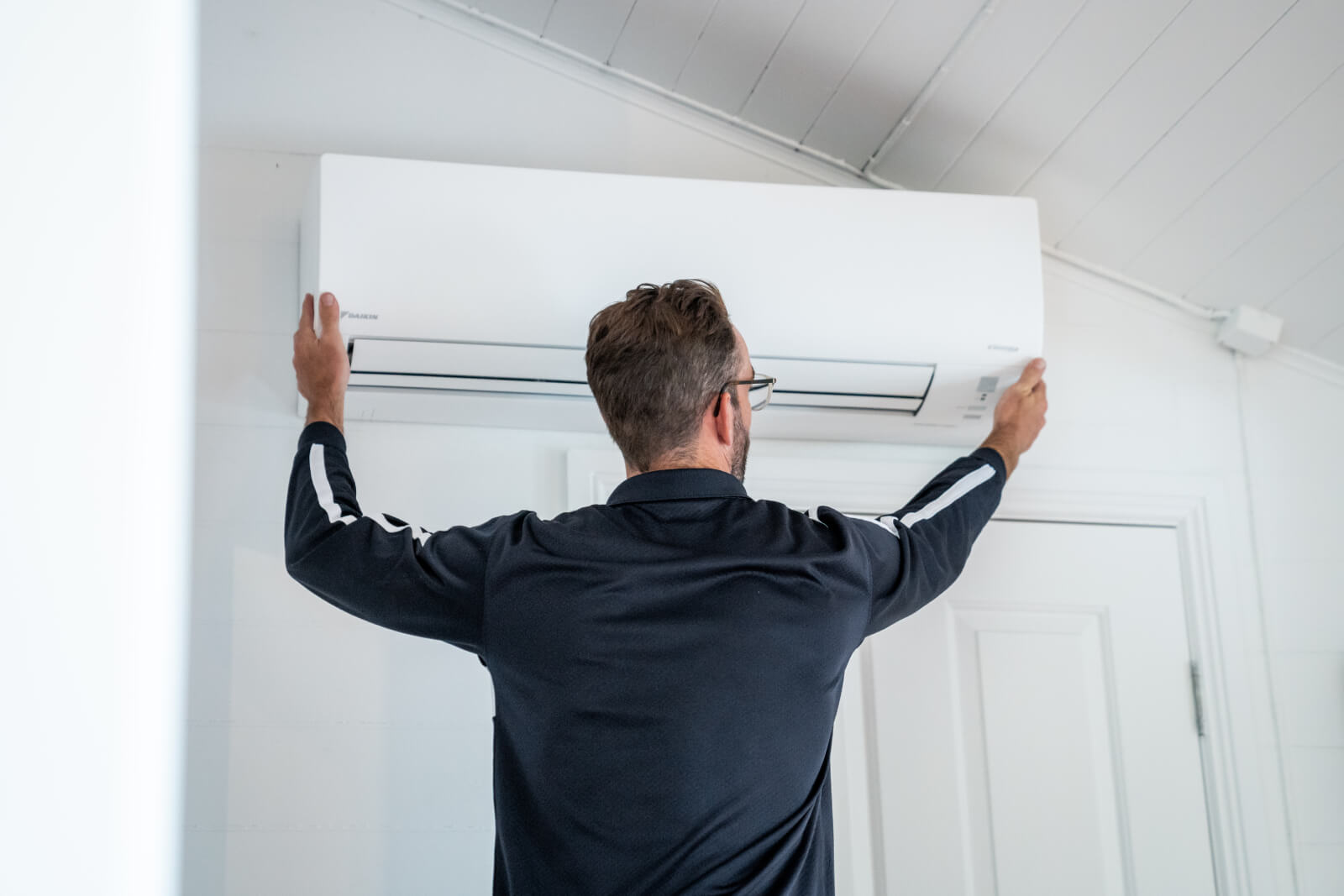
- Above doorways: Tall doorways have generous header space where slim units become less prominent
- Matching bulkheads: Custom-built bulkheads mirroring period cornice details conceal units completely
- Corner positioning: High corner placement keeps units away from primary sightlines
- Service areas: Hallways or transitional spaces keep units out of the main living areas
Outdoors:
- Ground platforms: Position equipment behind landscaping or lattice screens
- Side/rear placement: Keep units away from street frontage to maintain heritage character
- Heritage screening: Hide behind period-appropriate fencing or strategic plantings
Learn more about how we can help you with air conditioning in Maryborough.
Structural Considerations for Timber Frames
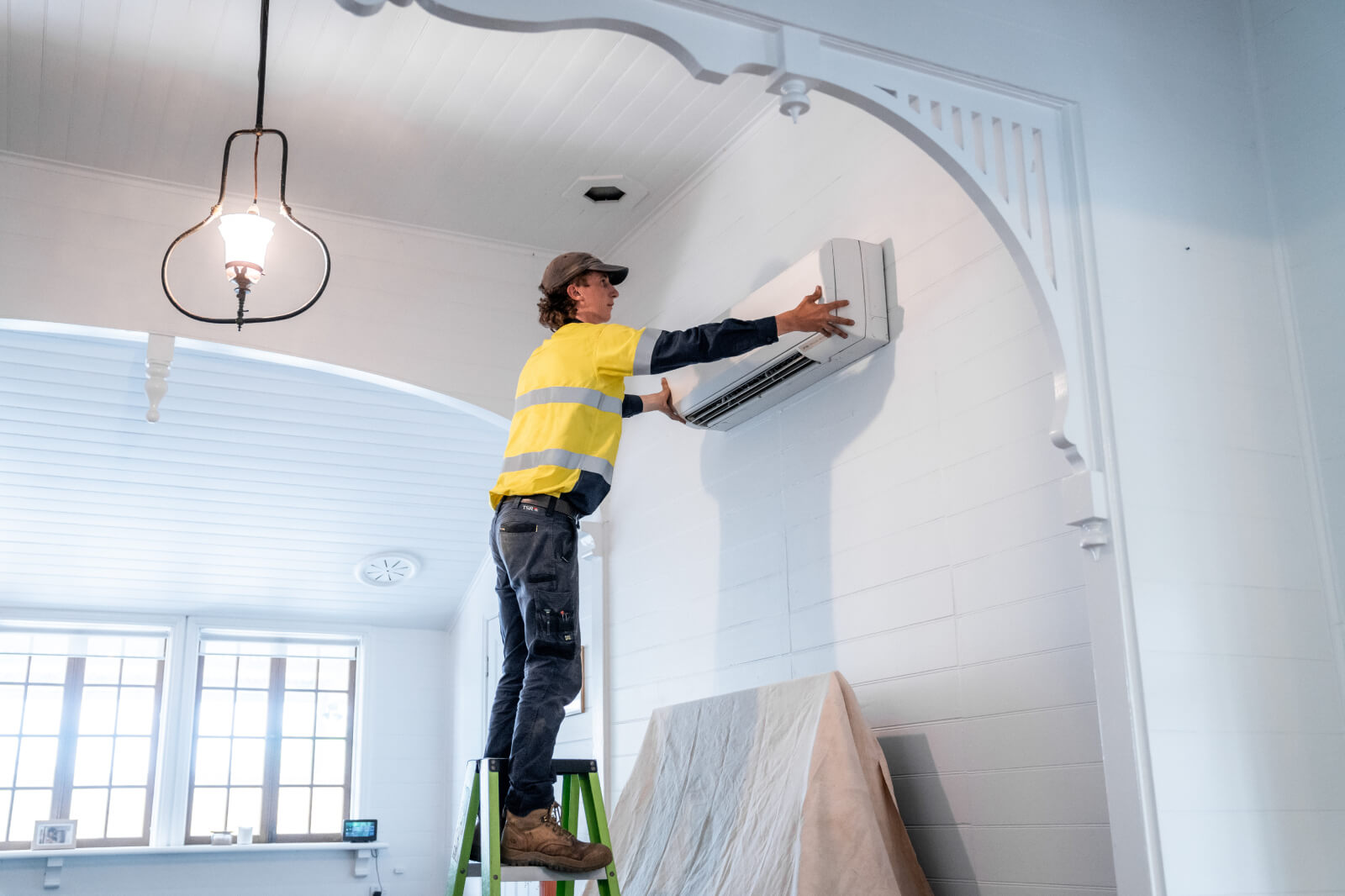
Outdoor units weigh 30-60kg, and timber verandah posts or aging stumps weren’t built to handle that extra load. We assess your home’s structural capacity first, then recommend the best installation approach, whether that’s ground-mounted platforms to protect verandah structures, reinforced brackets fastened to sound timber, or distributing the load across multiple points. All holes are pre-drilled and sealed against moisture, and we ensure termite-conscious installation that doesn’t create new pest entry points.
Council Approval for Heritage Properties
Council approvals are typically required for properties on Maryborough’s local heritage register, homes in heritage conservation areas, installations visible from street frontage, and work affecting the external appearance of pre-1946 buildings.
Strategies councils appreciate include positioning equipment away from primary facades, using colours that match existing tones, providing heritage screening, and demonstrating reversibility for future changes.
Approvals usually aren’t needed for non-heritage listed homes outside conservation areas, installations completely screened from street view, or replacement of existing equipment.
TSR tip: Always check with your local council first to meet all heritage requirements for your home or suburb.
Energy Efficiency: Realistic Expectations
Heritage Queenslanders will never match modern home efficiency as timber walls have minimal insulation, and these buildings were designed to breathe, not seal tight.
Expect 20-40% higher running costs than modern homes, but you can improve efficiency with under-floor insulation, weather stripping, curtains with pelmets, and adding draft seals on internal doors. The biggest savings come from cooling occupied rooms only and using ceiling fans with your air conditioning.
What Actually Works: Our Practical Strategies
Start with properly sized split systems in your main living areas and bedrooms, and use ceiling fans, as running splits at 25-26°C with fans feels like 22-23°C without fans, and at a much lower cost. Only cool occupied rooms, not the entire house, and only use air conditioning when temperatures exceed what natural airflow handles, typically December-February. And, consider multi-head systems. For whole-home cooling, 3-5 indoor units connected to one outdoor unit provide room control without ceiling space requirements.
TSR’s Heritage Home Expertise
We’ve been cooling Queenslander homes for over 35 years, so we understand these properties, what systems work best, and how to integrate modern comfort without destroying character. When you work with us, you’ll receive proper capacity calculations for high-ceiling volumes, structural assessments for timber installations, heritage-sympathetic placement strategies, and council approval documentation support. We’ll give you honest advice about what actually works, not just what we have in the van.
Book an assessment, or give us a call on (07) 5482 8100 and let’s keep you comfortably cool all year long in your Maryborough heritage home.
Please Share This
Related Posts

Air Conditioner Replacement: Cost Guide & When to Replace vs Repair
Wondering whether it’s time to replace your air conditioner, or if one more repair will get you through? It’s one…
Read More
Commercial Air Conditioning Maintenance Guide for Queensland Businesses
Let’s face it – a commercial air conditioning system works a lot harder than the one at home. Running 8…
Read More
One Mile State School Gympie
TSR recently completed an air conditioning upgrade at One Mile State School in Gympie, delivered for QBuild and installed to…
Read More
Contact us today
Ready to start your project or have questions? Contact us